
Loading...
Serving Lathrop, CA and surrounding areas. (209) 841-4699
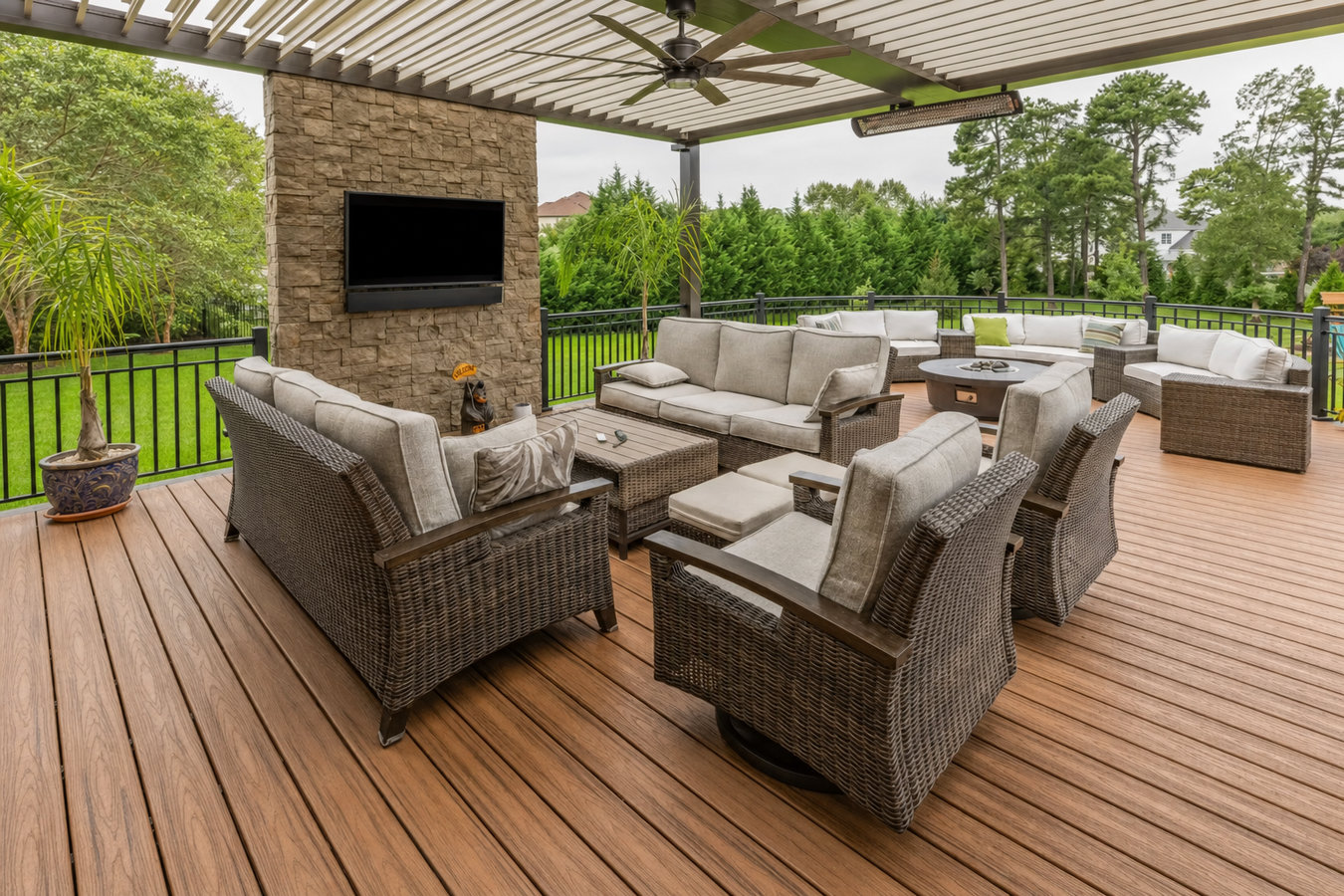
A pergola built for Lathrop conditions - deep footings for Valley clay, hardware rated for Delta winds, and permits handled from start to finish so your investment is protected.
Pergola installation in Lathrop, CA involves digging post footings sized for San Joaquin Valley clay soil, setting posts in concrete, and building an open-beam overhead structure - most projects take one to three days to construct once the city building permit is approved, with permit review typically adding one to two weeks to the start date.
Many Lathrop homeowners reach out because they have a concrete patio or deck that never became the outdoor living space they imagined. The problem is usually a combination of relentless summer heat and no overhead structure to break it. A pergola gives your yard a defined outdoor room with partial shade that you can add to over time - a retractable canopy, string lights, a ceiling fan - without committing to a fully enclosed structure. Many homeowners start with a pergola and later consider pairing it with a covered deck or patio cover for full weather protection in one section while keeping the open-air feel in another.
Every pergola we build in Lathrop goes through the city building permit process. For homeowners in HOA communities - including River Islands and Mossdale Landing - we prepare and submit the design documentation the association requires before any post goes in the ground.
If you step outside on a summer afternoon and immediately go back inside because there is no shade, that is the clearest sign a pergola would change how you use your home. In Lathrop, where triple-digit temperatures are common from June through August, an uncovered patio is essentially wasted space for half the year. A pergola with a shade canopy can turn that space into somewhere you actually want to spend time.
Many Lathrop homes built in the 2000s and 2010s came with a basic concrete slab that was never turned into anything. If your patio slab just sits there without any sense of enclosure or definition, a pergola can give it structure and make the space feel like a real outdoor room rather than a patch of concrete you walk past.
If you already have an older pergola or patio structure that wobbles when you push on it, has visibly rotted wood at the base of the posts, or has rusted hardware, it is time to replace it rather than patch it. Structures in this condition can be a safety hazard, especially during the strong Delta winds that move through the Lathrop area in the evenings.
A pergola gives you a permanent overhead structure to hang lights, a fan, or an outdoor heater - things that make outdoor evenings comfortable even when the temperature drops after sunset. If you have been stringing extension cords across your patio or doing without, a pergola installation solves that problem cleanly and permanently.
We build both attached and freestanding pergolas, and we walk through material options with every homeowner before anything is decided. An attached pergola connects to your home's exterior wall and creates a natural extension of your indoor living space - it is the most popular choice for patios right off the back door. A freestanding pergola stands on its own posts anywhere in your yard, which gives you more flexibility about placement and avoids any structural attachment to your home. Both types require footings, and both require a building permit in Lathrop for structures above a certain size. For homeowners who want to create a complete outdoor entertaining area, our outdoor kitchen decks service pairs well with a pergola overhead.
The materials we work with range from pressure-treated lumber and cedar to aluminum and vinyl. Wood gives you a warm, natural look and is the most common choice - cedar in particular holds up well in the heat with periodic sealing. Aluminum and vinyl cost more upfront but require almost no maintenance and will not rot or warp after years of Valley summers and Delta wind exposure. If you want wood aesthetics without the upkeep, composite options are worth a conversation. We also handle add-ons like shade canopies, lighting rough-in, and ceiling fan blocking - details that are much easier to include during construction than to add later.
Connects directly to your home's exterior wall for a seamless indoor-to-outdoor transition - the most common choice for Lathrop patios right off the back door.
Stands on its own posts anywhere in your yard, ideal for homeowners who want to define a separate outdoor space independent of the house.
The classic look at a practical price - requires periodic sealing to hold up in the Valley's heat but delivers a warm, natural finish that aluminum cannot match.
The lowest-maintenance option for Lathrop's climate - handles summer heat, Delta winds, and seasonal rain without rotting, warping, or splintering.
Adds a retractable or fixed fabric canopy to the basic structure - the right choice for homeowners who want the open-air feel with meaningful afternoon shade.
Electrical blocking and wiring installed during construction so you can add string lights, a ceiling fan, or an outdoor heater without a separate contractor visit later.
Lathrop sits in the northern San Joaquin Valley, where summer temperatures regularly exceed 100 degrees F and the clay-heavy soil under most properties expands in the wet season and contracts in the dry season. Both of those conditions put extra demands on outdoor structures. Post footings that are not sized and set correctly for local soil conditions can shift or lean within a few years - a problem that is expensive to correct after the fact. A contractor who works regularly in this area knows the footing depth and concrete sizing that the local conditions require. For homeowners in communities like Turlock and the surrounding San Joaquin Valley, these soil factors are consistent across the region and not something that outside contractors always account for.
The Delta breeze is the other local factor worth knowing about. Lathrop is close enough to the Sacramento-San Joaquin Delta that evening winds can be strong and persistent in late spring and summer. These winds can stress lightweight pergola structures and tear shade sails that were not rated for wind exposure. We use heavier post hardware, deeper anchor depth, and shade materials specified for wind conditions in this area. Homeowners in Manteca and other nearby communities share the same wind exposure, and the same standards apply across every project we build in the area. The National Association of Home Builders publishes current guidance on outdoor structure best practices that we follow alongside local code requirements.
We respond within one business day. The first conversation covers your yard, your goals, and a rough sense of budget - no pressure, no sales pitch. We schedule an on-site visit to see your space in person.
We visit your yard, look at the surface, check your HOA rules if applicable, and walk through material and placement options. You get a written estimate with a clear breakdown of what is included - no surprises.
We submit the permit application to the City of Lathrop on your behalf. If your neighborhood has an HOA, we prepare and submit the design documents they require. This stage typically takes one to three weeks - we manage it for you.
Once permits are approved, the crew arrives, sets posts in concrete, and builds the overhead structure - usually completed in one to three days. A city inspector signs off on the finished work, and we walk you through the completed pergola before we leave.
We handle permits and HOA submissions - you just pick the design. No obligation, no pressure.
(209) 841-4699We submit the permit application to the City of Lathrop and schedule the post-construction inspection - you do not have to chase paperwork or figure out the city's process. A permitted pergola is on record, legally protected, and adds documented value when you sell.
San Joaquin Valley soil expands when wet and contracts when dry. We size and set footings specifically for those conditions, so your pergola stays plumb and solid through years of seasonal soil movement - not just for the first season after installation.
Most of Lathrop's newer neighborhoods have HOA architectural guidelines. We are familiar with the submission requirements for communities including River Islands and Mossdale Landing, which means your approval process goes smoothly and you are not building first and asking permission later.
Evening Delta winds can be strong enough to stress a pergola that was not built for this area. We use structural hardware and anchoring depth appropriate for Lathrop's wind exposure, which is why our structures hold their alignment long after lighter builds start creaking.
We have been building outdoor structures in the Lathrop area since Lathrop Deck and Fence was founded, and that local history means we know the permit office, the soil conditions, and the HOA approval processes across this part of the San Joaquin Valley. When you call us, you are not explaining your local conditions to someone who has never worked here.
Combine a pergola overhead with a built-out cooking area below - the natural next step for homeowners who want a complete outdoor entertaining space.
Learn MoreA solid patio cover delivers full weather protection when a pergola's partial shade is not enough for Lathrop's hottest afternoons.
Learn MoreSpots fill up ahead of summer - reach out now and we will get your project on the calendar before the heat season arrives.